Most farms will get their first real shot at the Sustainable Farming Incentive 2026 in September. Window 1 was only open to small farms and those without an existing agri-environment agreement, and it has moved fast. By 13 July, Defra had already allocated 75% of the £60m set aside for that first window.
Window 2 opens in September to every eligible farmer and land manager in England. There is no fixed closing date. It will simply close when the money runs out, and there is good reason to think that could happen quickly.
If you farmed through the Basic Payment Scheme years, you will remember checking your maps before you claimed each spring. That habit has quietly disappeared since BPS ended, and it is exactly the kind of gap that trips farmers up when a scheme reopens on short notice.
Why Window 2 will be the one that matters
Out of a total £240m confirmed for SFI 2026, only £60m sat behind Window 1. Any budget left unspent rolls into Window 2, but so does almost everyone else who wants to apply.
Consider the scale of what is coming. Around 13,000 Countryside Stewardship agreements are due to end in December 2026, alongside roughly 4,000 existing SFI agreements ending between September and December. If the average new SFI26 agreement is worth around £50,000, the remaining budget stretches to only a few thousand agreements nationally.
Defra says it will publish updates as the budget hits 25%, 50% and 75% allocated, as it did for Window 1. Useful information, but no help if your application is not ready to submit the moment the window opens.
The problem that catches most farmers out: outdated maps
The single most common reason SFI applications stall is not eligibility. It is mapping.
Every SFI26 action is checked against the land cover and land use recorded on your digital maps with the Rural Payments Agency. If a parcel is recorded as permanent grassland and you want to apply for an arable action, the system will not let you. If land is shown as temporary grass and you want the no-insecticides action, the land use record needs correcting first.
None of this is unusual. It is what happens when a routine check disappears. For years, farmers reviewed their maps every spring as part of their BPS claim. With BPS gone, many have not looked at their RPA records since.
| Check | Why it matters |
|---|---|
| All land parcels are shown correctly | Missing parcels cannot be included in an SFI26 application |
| Land cover is accurate (arable, permanent grassland, permanent crops) | Incorrect land cover blocks specific actions outright |
| Total area per parcel is correct | Errors here affect eligibility and payment calculations |
| Registered contact email is current | The RPA will use it for all SFI26 correspondence |
| Agent has the right permissions | Without "Business Details: Full" or equivalent, an agent cannot submit on your behalf |
Corrections can be made online or through an RLE1 form, but they take time to process. Leaving this until September is a good way to miss the opening days of the window, which, given the budget, could matter a great deal.
Decide what you want from an agreement before you apply
Once the admin is sorted, the harder question is strategic. An SFI agreement runs for three years, but the decisions you make now will shape the farm for longer.
For each action, ask a few plain questions. Does it fit your rotation. What does it cost to establish. What income are you giving up. Does it sit well alongside an existing agreement. Can your current labour and machinery actually deliver it.
Farms with depleted soils often use SFI actions to support a genuine shift in how the land is farmed, not as a bolt-on payment. Smaller arable holdings sometimes find the admin outweighs the return, and focus instead on marginal ground.
There is no guarantee of a further SFI scheme after this one. That does not make planning pointless. It makes it more important to know what kind of farm you want in five to ten years, and to use this scheme to move toward that, rather than waiting for certainty that may not come.
If you have an agreement ending this year
One change is genuinely helpful. Defra is building functionality so farmers with an SFI23, Countryside Stewardship Mid Tier or Higher Level Stewardship agreement ending soon can apply for SFI26 on that land before the old agreement expires. This is expected to be ready when Window 2 opens.
Previously this was not possible, because SFI26 actions could not overlap with an existing paid agreement on the same land. The change should allow a smoother handover for the thousands of agreements ending this winter, without a funding gap in between.
| Window 1 | Window 2 | |
|---|---|---|
| Opens | 30 June 2026 | September 2026 |
| Eligible farms | Small farms (up to 50ha) and farms with no existing ELM revenue agreement | All farmers and land managers |
| Budget | £60m, plus any unallocated funds move to Window 2 | Remaining share of the £240m total |
| Closing date | Fixed period, or sooner if budget is exhausted | Not fixed, depends on demand |
What we still don't know
Defra has not confirmed how applications will be prioritised if demand is high, though a first come, first served basis is widely expected, as with Window 1. There is also no published funding commitment for SFI beyond this scheme, and no budget projection for the next two to three years. Plan accordingly, rather than assuming continuity.
What to do now
Before September, check your RPA digital maps, correct any land cover or parcel errors online or via an RLE1 form, confirm your registered contact details, and make sure any agent has the correct permission. Then use the time before the window opens to decide which actions actually suit your farm, rather than deciding under pressure once applications are live.
A lot of the SFI story turns into an admin story. Land parcel data, action choices, evidence requirements and expiry dates all need to line up correctly, often across several agreements at once. Getting that right by hand is possible. Getting it right at speed, when a window could close within weeks, is harder.
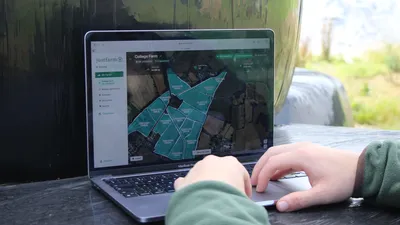
This is the gap JustFarm is built for. It keeps your farm's mapping, SFI planning and evidence organised in one place, so when Window 2 opens you are submitting a ready application rather than untangling records under time pressure. Explore the SFI page to see how the planning tools work, or create a free account to get your maps and records in order before September.
People also ask
When does SFI 2026 Window 2 open?
- September 2026, exact date unconfirmed. Open to all farmers and land managers, unlike Window 1.
Can I apply for SFI26 if I already have an SFI23 or Countryside Stewardship agreement?
- Yes, provided you don't already hold an SFI26 agreement. Defra is also building functionality to let farmers with expiring SFI23, CS Mid Tier or HLS agreements apply for SFI26 on that land before the old agreement ends.
Why does my SFI application keep getting blocked?
- Usually a mismatch between the action you want and the land cover on your RPA digital maps, for example an arable action on land recorded as permanent grassland. Checking your maps first avoids this.
To see how JustFarm's mapping and evidence tools fit into your SFI planning, view pricing or start with a free account today.