An RPA letter lands in the inbox: your farm has been selected for a site visit. Not because anything is wrong, just routine. The field officer asks for evidence that the cover crop was actually established when the agreement says it should have been. The photos on a phone are from three weeks after planting, undated, mixed in with two years of other farm pictures. That gap between "we did the work" and "we can prove it" is where SFI payments actually get held up.
How the RPA actually checks compliance
The Rural Payments Agency (RPA) uses three methods to check you're meeting your SFI26 agreement's requirements, and it can use any combination of them at any point during the three-year agreement.
Site visits, physical or virtual, are the most direct. If your farm is selected, you must let the field officer carry out the visit, help with anything reasonably requested, and supply whatever evidence they ask for. The RPA will try to agree a date with you, but if that is not possible, it only has to give 48 hours' notice. If it reasonably suspects a serious breach or fraud, it can turn up with no notice at all.
Remote monitoring uses aerial photography and satellite imagery to check land cover, vegetation and soil erosion risk without a visit, and desk-based checks review whatever supporting evidence you've already been asked to provide.
All three methods end up asking the same question: what have you got on file, and can you put your hand on it quickly. Farms that keep that answer organised by action and parcel as they go have a much shorter conversation with a field officer than farms digging through a camera roll.
What you actually need to keep
The scheme rules are direct about this: you must keep evidence to show you've complied with your SFI26 agreement's obligations, including field operations and associated invoices, for at least seven years from your agreement's end date or its termination date if that's earlier. Every SFI action has its own specific evidence requirement listed against it in the Find funding for land or farms tool, so the exact list varies by action, but the test is the same. Can you show what you did, where and when, and would the RPA agree it could reasonably achieve the action's aim.
| Evidence type | Why it holds up |
|---|---|
| Dated, geotagged photographs | Shows an action happened on specific land at a specific time, not reconstructed later |
| Field operation records | Confirms what was done, when, and by whom |
| Invoices and receipts | Proves inputs like seed or fertiliser were bought and applied |
| Management control evidence | Tenancy agreements or equivalent, showing you control the land for the agreement's full duration |
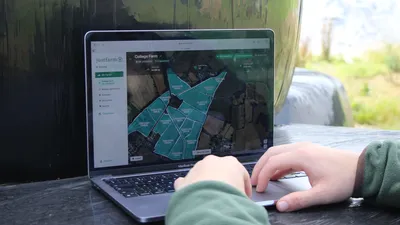
Seven years is a long time to rely on a phone camera roll staying intact. This is one of the specific gaps JustFarm closes: it lets you log evidence against the exact action and parcel it belongs to as you go, so nothing depends on remembering where a photo or invoice ended up two years later.
Management control evidence is worth flagging on its own. The rules require you to keep proof you will control the land for the full duration of the actions you've selected, and hand it over if asked. If you lose management control, you must tell the RPA in writing as soon as possible, and not doing so is itself a potential breach. Tenancy paperwork gets filed away and forgotten precisely because it isn't needed day to day, which is why it helps to keep it attached to the parcel it relates to rather than in a separate drawer.
What actually counts as a breach
The rules set out several ways you could breach your agreement: not telling the RPA about a change of circumstances, not providing evidence when asked, obstructing a site visit, failing to meet the agreement's terms, or giving false or misleading information. Breaches by an employee or agent acting on your behalf count too.
Notice how many of those are record-keeping failures rather than farming failures. "Not providing evidence when asked" is not the same as not having done the work, it is not being able to produce proof fast enough, and that is exactly what organised records prevent by default.
If the RPA suspects a breach, it carries out a proportionate investigation and will not usually withhold your payments while it runs. It will discuss its findings with you where possible and consider whether you have a "good reason" before making a formal determination.
Good reasons, and what happens if there isn't one
The rules list specific good reasons for a breach: prolonged adverse weather, flooding, disease, serious illness, death of the agreement holder, unforeseen loss of management control, bankruptcy, evidenced supply chain problems such as a shortage of soil testing capacity, and criminal damage by a third party. If you already knew about the issue when you entered the agreement, it's unlikely to count.
Note the word evidenced. A good reason still needs to be shown, not just claimed, within roughly eight weeks of you being able to notify the RPA. Farmers who already keep dated notes on what happened are simply better placed to write that notice quickly and specifically.
Without a good reason, the RPA weighs how serious the breach was, whether it was intentional or negligent, and its impact on the action's aims. A straightforward breach might mean a chance to rectify the issue, a warning, or adjusted payments. A serious breach, intentional, negligent or repeated, can end your agreement early and bar you from any financial assistance scheme for up to two years. Evidence of fraud triggers the relevant legal process instead.
You can challenge a determination through the RPA's complaints procedure within 60 days, and appeal within a further 60 days if you believe there was an error of fact, law, or a material procedural error.
What we still don't know
The rules set no fixed penalties for specific breaches, so two farms with similar issues could see different outcomes depending on history and circumstances. It's also unclear how site visit rates will change now SFI26 has brought in far more agreement holders than before.
What to do now
Take photographs on the day an action is completed, not weeks later, and keep them somewhere you can actually find again. Keep invoices for anything you buy to complete an action, and keep proof of management control on file rather than assuming it's obvious. If something affects your ability to comply, tell the RPA in writing within eight weeks rather than waiting to be asked.
Every one of those steps comes down to the same thing: evidence organised before you need it, not assembled in a hurry once you do. That is the point of JustFarm. It ties your photographs, invoices, field records and management control paperwork to the specific action and parcel they belong to, so when a site visit letter arrives, or the RPA asks a change of circumstances question, the answer is already there rather than scattered across a phone, an inbox and a filing cabinet. You can create a free account to start building that record now, or explore the SFI page to see how it maps to your own agreement. Agents managing evidence across several holdings can view pricing for tools built around exactly this kind of record-keeping.
Good evidence is built over time, not assembled the week an RPA letter arrives. If you cannot show what you did, it did not happen as far as an inspection is concerned, and probably fine is not a compliance strategy.