After the SFI26 application window closed last week, we sent out a survey to our community of farmers and agents to ask for feedback on the SFI26 application process. We plan to share it with DEFRA and the RPA.
Farmer Feedback
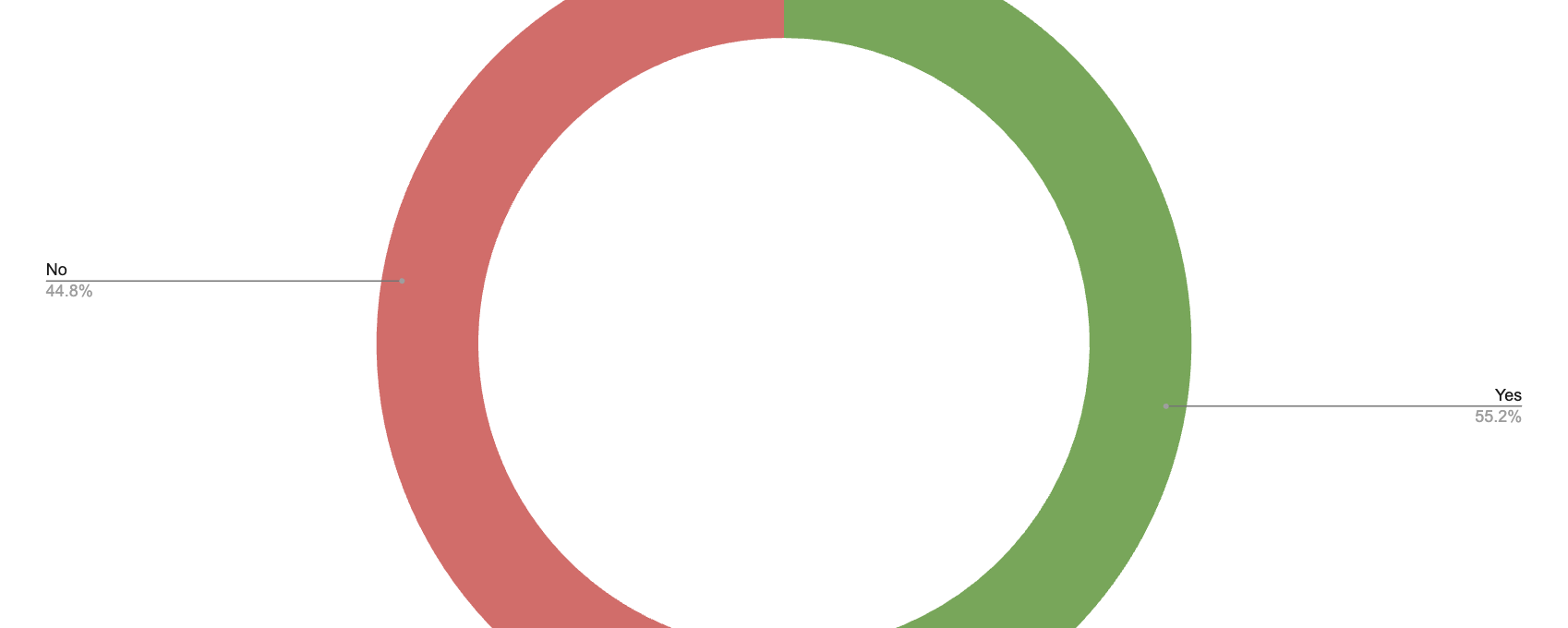
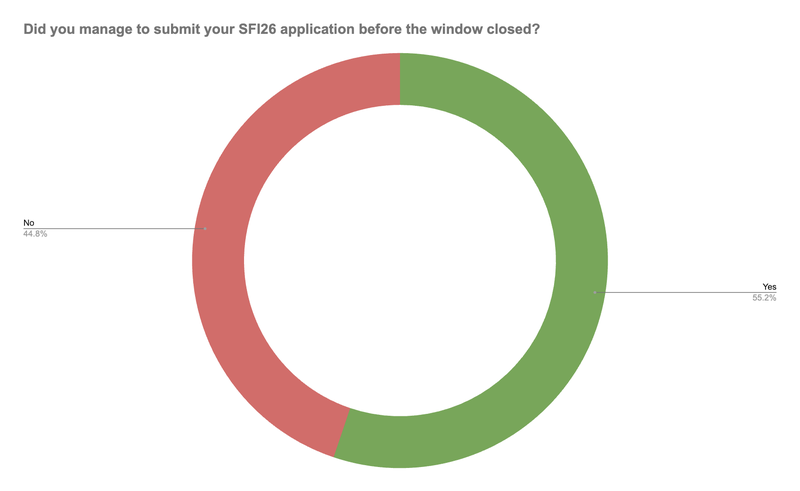
We heard from 28 farmers, many of whom managed their own SFI applications. 45% of them did not manage to get their SFI26 application in on time.
"I took sheep to market and when I returned the window was closed"
The strongest theme was a simple clash with the working day. Farmers described checking from the early hours, then heading out to do the day's work and coming back to find the funding gone. One had been calving until 3:30am, did the morning checks and the day's jobs, and sat down to apply at 4pm, "only to find I was too late." Another ended work early when warnings started circulating and logged on at 3:50pm, "but all the funds were gone and I was unable to even start the process." As one put it: "Farmers are generally busy farming during the day, then get on with the administrative tasks in the evening." Several suggested opening the window overnight or moving away from time-limited windows altogether.
Doing it yourself was a disadvantage
Farmers who applied without an agent felt the format worked against them. One waited for their son to get home from college to help, and missed it: "We can't afford to pay an agent when he can do it." Another, with nearly eighty fields, started early and finished at 4pm, just after the window closed. "The system should be simple enough for all farmers to use without representation," wrote one respondent.
Errors with no explanation
Farmers with agreements about to expire were especially affected. They reported confusion that there was no option to set an agreement start date, and actions rejected with no clear reason. Some dropped options just to get an application through. One small farm lost out on options for traditional buildings and arable land after the portal flagged land-use errors the farmer couldn't find: "It's very depressing to lose £9,000 a year for no good reason." Others reported being unable to select any actions on some parcels at all.
The cost
Some losses were large: £13,000 for one farm, £55,000 a year for an award-winning conservation farm that had already started arable reversion. Several farmers worried what the gap in funding means for environmental work already done. "Lack of certainty will lead to the loss of previous environmental gains," one warned. Another described feeling "physically exhausted" by the process.
It wasn't all bad
A handful of farmers found the process straightforward. One completed a large application in an hour and said the site "ran very smoothly". The common thread was being fully prepared in advance, and being able to drop everything at the right moment. That second part, it seems, is where the system fails most farmers.
What farmers want to see
- Clear notice of when windows open, communicated directly to farmers.
- Windows that suit farmers: open overnight, run for longer, or replaced with an open-ended scheme.
- Staged windows by farm size or turnover, so smaller farms get a fair chance.
- A bigger budget, though farmers were split on whether the £100k cap should go.
- Error messages that explain what's wrong, and proper support for agreements about to expire.
- A rethink of the overall model. One farmer suggested a baseline payment for active farmers, with environmental schemes on top.
If the SFI process has left you struggling, the Farming Community Network offers confidential support. Call 03000 111 999.
Agent Feedback
We heard back from 11 agents. Only 1 of them managed to get all their clients' applications in before the window closed. 5 of them didn't manage to get more than half their applications in. The responses were unanimous in tone. Four themes came up again and again.
There was not enough time
The overwhelming complaint was the design of the window itself. With little notice of the opening date/time and funding exhausted within about six hours, agents described it as a race rather than an application process. "You planned to do an application in the afternoon, then there was no afternoon," one told us. Another, who had spent four months preparing for the window, ran out of time partway through submitting a large estate's application: "I just could not type quickly enough." Several also pointed out the poor timing, which fell in the middle of maize harvest and autumn drilling.
A portal that didn't match the rules
Agents who were ready on time often hit technical barriers. They reported actions blocked by clashes with existing agreements that should have been allowed, split parcels rejected despite matching land covers, and no option for setting delayed start dates that they expected to see. "Out of the 13 I submitted I had just one go through without a glitch," said one. Others described the system buffering, and having no way to reach anyone at the RPA on the day.
The human cost
Many responses were personal. "The whole day left me a wreck – and I am not easily broken," wrote one agent with decades of experience. Another struggled to open their laptop in the days afterwards, due to feeling burnt out. Almost everyone described the difficult conversations that followed with clients who had missed out, some of whom now face real questions about their business's viability. Smaller agents fear lasting damage: "Many large land agents employed extra staff to get these through. Small businesses can't do that."
Who loses out
Agents worried that the format favoured those with the most resources. Small family farms, mid-sized farms caught between the "small" and "everyone else" tiers, and smaller agencies all came up. One agent questioned whether a race produces good outcomes at all: "The money has been spent, but has it been spent well?"
What agents want to see
- A fairer way to share limited funds. Accept all applications within a set period, then scale every award back by the same proportion, as happens with oversubscribed share offers. Alternatively, lower the cap per farm.
- Let applications already in progress be completed.
- More size bands, so mid-sized farms aren't competing with the largest estates.
- Windows that fit the farming calendar, staggered and away from harvest and drilling.
- A properly tested portal that recognises when existing agreements end and supports delayed start dates.
- Designing schemes with the people who deliver them. As one agent with 25 years in the industry put it: "Let's develop a system and programme together that actually works."