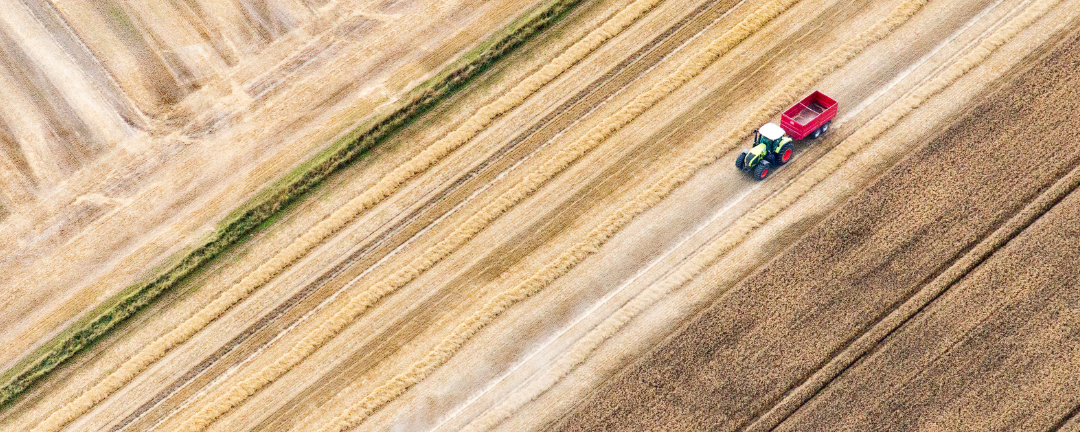
A farmer with cover crops written into their Sustainable Farming Incentive (SFI) agreement watches the ground turn to dust through August, unable to graze it without breaching the agreement, while livestock a field away run short of forage. That was the exact bind this summer's drought put thousands of farmers in, caught between agreement rules written for normal weather and a season that was anything but.
What was actually announced
With around three-quarters of England in drought and more than 1,500 abstraction licence restrictions recorded in a single week in mid-August, the Prime Minister and Farming Minister announced a support package on 15 August during a visit to a farm in Cornwall.
| Measure | Detail |
|---|---|
| ELM temporary adjustments | Flexibility to cut, graze and delay establishment on land in an agreement, without losing payments |
| SFI26 funding increase | Extra £50 million for Window 2, taking its budget to £230 million and the total SFI26 budget across both windows to £290 million |
| Reservoir planning changes | Updated national planning guidance to remove barriers to on-farm reservoirs |
| Water Management Grant | Up to £15 million for on-farm reservoirs, opening in autumn 2026 |
| Abstraction licence flexibility | Environment Agency prioritising short-term variations to licence conditions |
The £65 million figure covers the SFI26 top-up and the Water Management Grant together, alongside the non-financial changes to planning and licensing.
The ELM flexibilities: who qualifies and what you can actually do
The temporary adjustments apply to Environmental Land Management (ELM) revenue agreements under SFI, current Countryside Stewardship Higher Tier, legacy Countryside Stewardship (including Mid Tier), and Higher Level Stewardship under Environmental Stewardship.
You can use them if your land sits in a county the Environment Agency has declared to be in drought or prolonged dry weather status. Around three-quarters of England was in drought at that point, and as of 15 August 2026 every county in England met one status or the other, so in practice every ELM agreement holder in the country is currently eligible. The flexibilities stay available until the Environment Agency moves a county back to normal status, so this is not a fixed window, it tracks the weather.
In practice, the adjustments let you cut or graze land that is in an agreement to ease shortages of forage, fodder and bedding, create firebreaks on agreement land to protect buildings, livestock and crops from wildfire, and take more time to establish actions where the ground has been too dry to plant. None of this affects the payments you are due under your agreement, provided you follow the process.
That process matters. If an action fails to establish this year, you need to notify the RPA using a Minor and Temporary Amend form for Countryside Stewardship, or the equivalent Temporary Adjustment Request form for other ELM agreements, and keep it on file. You do not have to re-establish a failed action this year to be paid, but you will need to re-establish it next year to keep being paid in later agreement years. Defra has also said you should keep field-level records of operations, relevant invoices, and stocking or grazing records, since the RPA can ask for these at any time. If your land includes a Site of Special Scientific Interest, changes to management may still need consent from Natural England first.
Why the SFI26 top-up matters beyond the headline figure
The extra £50 million lands directly in the SFI26 Window 2 budget, which opens to all farmers on 22 September. That takes the Window 2 budget to £230 million, and the total SFI26 budget across both windows to £290 million. Defra's argument is that SFI already funds the kind of practice that builds drought resilience, cover crops that raise soil organic matter, and no-till approaches that reduce moisture loss, so a bigger budget this year should mean more farmers can access those actions rather than being squeezed out.
Reservoirs and water storage
The Water Management Grant is reopening with up to £15 million for on-farm reservoirs, to help farmers store winter water for summer use. It is expected to open in autumn 2026, but Defra has not yet published the eligible items or application process, so anyone planning a reservoir should watch the Farming Blog rather than assume current guidance is final.
Alongside the grant, Defra is publishing its response to the National Planning Policy Framework consultation, making clear that local authorities should support agricultural infrastructure including reservoirs, greenhouses, polytunnels and farm shops. The Ministry of Housing, Communities and Local Government is due to publish updated planning guidance for on-farm reservoirs in September, and Defra is reviewing permitted development rights for reservoirs with the NFU and CLA to see whether further reform is needed.
Water abstraction: what flexibility actually looks like
If you hold an abstraction licence, the Environment Agency can already consider temporary flexibilities, including extending abstraction seasons, allowing earlier reservoir refilling, trading water rights between licence holders, joining licences together, moving or adding abstraction points, and increasing licensed quantities where conditions allow. Every request is still assessed for its impact on the environment and other water users, so approval is not automatic.
From September, the Environment Agency is also simplifying the application process for long-duration abstraction licences tied to reservoirs, intended to make it easier for farmers to secure the licensing certainty that long-term finance for a reservoir usually requires.
What we still don't know
Defra has not published the item list, payment rates or opening date for the Water Management Grant beyond "autumn 2026". It has also acknowledged, in response to farmer feedback, that the package does little for non-land-owning livestock keepers and graziers, and no separate borehole funding has been confirmed despite repeated requests. Subscribing to the Defra Farming Blog is currently the only way to get an update as soon as one lands.
What to do now
If you are using the ELM flexibilities, submit the correct form for your scheme straight away and keep dated records of every field operation, invoice and grazing decision you make under the easement, since the RPA can request them at any point. If reservoir storage is on your radar, start scoping what you would need now so you are ready when the Water Management Grant opens. And if you have not yet weighed up whether SFI26 fits your farm, the larger Window 2 budget is a reason to look again before it opens on 22 September.
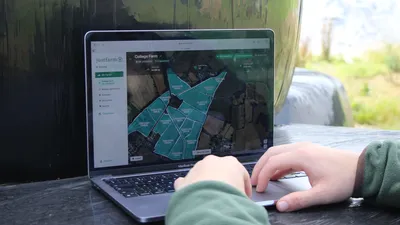
Keeping track of which parcels are under a temporary adjustment, what evidence you have filed for each one, and how that interacts with your wider SFI or Countryside Stewardship agreement is exactly the kind of record-keeping that gets messy under pressure. JustFarm keeps your maps, your agreements and your supporting evidence in one place, so a drought easement this summer does not turn into a compliance headache next year. You can create a free account to start logging this year's adjustments properly, or explore the SFI page to see whether the bigger Window 2 budget changes your options. Farms and agents managing several agreements can view pricing for tools built around exactly this kind of tracking.
Probably fine is not a compliance strategy, and that applies just as much to a drought easement as it does to a standard agreement action. If you cannot show what you did and why, it did not happen as far as an inspection is concerned.