You run 42 hectares of mixed arable and grass.
You have looked at SFI before. Maybe you meant to apply last time. Maybe the window closed before you got there. Maybe you watched other farms pick up payments for things you were already doing.
Now June is coming.
SFI26 Window 1 is about six weeks away, and this time the structure is different. There are fewer actions. There is a payment cap. There is only one application per business.
And there is a fixed window.
The farms that prepare now will move quickly when it opens. The farms that wait will spend June trying to piece together something that should already be clear.
That difference is where most of the stress sits.
What is happening in June
SFI26 Window 1 opens in June 2026.
It is expected to remain open for around two months, but Defra has made it clear it may close earlier if the available budget is allocated.
Window 1 is restricted.
It is open to:
- farms between 3 and 50 hectares
- farms of any size with no existing RPA-administered ELM agreement
If you fall into either category, June is your opportunity.
If you do not, you wait for September.
You only get one application per farm business in 2026.
That makes timing matter more than it has before.
What has changed in SFI26
This is not a small adjustment to the previous scheme.
The structure has been reset.
| Area | Previous SFI | SFI26 |
|---|---|---|
| Payment cap | No cap | £100,000 per year per business |
| Number of actions | 102 | 71 |
| Agreement length | 5 years | 3 years |
| Management payment | £50/ha (first 50ha) | Removed |
| Minimum land | 5 hectares | 3 hectares |
| Applications | Multiple allowed | One per business |
For smaller farms, the cap is less of a constraint.
What matters more is:
- fewer actions to choose from
- shorter agreements
- no management payment
The result is a system that looks simpler on the surface, but requires more deliberate planning to get right.
This is where mapping your options early makes a difference. Seeing which actions actually fit your parcels, rather than trying to decide under time pressure, is the shift that separates a quick application from a slow one.
Start with the land, not the scheme
The most useful preparation does not start with the handbook.
It starts with your farm.
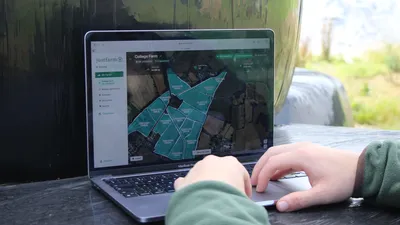
Before you do anything else, open JustFarm and check your parcel map. JustFarm pulls your data directly from the Rural Payments Agency, so if RPA have updated your boundaries or registered any changes, you will see that reflected straight away.
Check it properly:
- Are boundaries accurate?
- Has anything changed on the ground?
- Are all parcels correctly registered?
This is not admin for the sake of it. Incorrect parcel data is one of the most common reasons applications slow down or need revisiting. Catching it now, before you start planning, saves a lot of headaches later.
Once you are satisfied your map is accurate, go and walk the farm. Look at each parcel and ask a practical question: what could realistically sit here for three years?
- Marginal headlands
- Awkward corners
- Low-performing patches
- Existing margins or buffers
- Hedgerows and boundaries
You are not choosing actions yet. You are building a picture of what is possible. Having your parcel map open in JustFarm as you do this makes it easier — you can see each field clearly rather than relying on memory.
Build your action options early
Once you understand your land, you can start matching it to likely actions.
For small farms, that usually means:
- Hedgerow management
- Buffer strips
- Pollen and nectar areas
- Cover crops
- Low-intervention grassland
The key is not to overcomplicate it. Actions should fit around your existing system, be easy to manage, and be easy to evidence.
Once you are ready, open the JustFarm Planner and start building. You can match actions to specific fields, see realistic payment totals, and save multiple draft plans so you can explore different options without committing to anything. When final guidance is published, adjusting your plan takes minutes rather than starting from scratch.
Trying to force high-maintenance actions onto unsuitable land creates problems later. Planning early removes a lot of pressure when the application window opens.
Evidence is where most applications fall down
The application itself is one step.
The agreement that follows is where most of the work sits.
Defra expects you to prove that each action has been delivered correctly. That means keeping records that show:
- what was done
- where it was done
- when it was done
This is where JustFarm earns its keep. As you carry out actions across the farm, you record them directly against the right parcel in JustFarm — photos, notes, dates, and field records all stored in one place and tied to your agreement. Nothing loose, nothing in a folder you will struggle to find at inspection time.
| Evidence Type | What It Should Show |
|---|---|
| Dated photographs | Clear link to parcel and action |
| Field records | Dates, methods and areas covered |
| Invoices | Inputs, contractors and timing |
| Maps | Accurate parcel-level delivery |
The principle is simple.
If you cannot prove it, it did not happen.
This is where many farms underestimate the workload. It is not difficult, but it requires consistency. Evidence built as you go is easy to manage. Evidence reconstructed later is not.
JustFarm makes that consistency straightforward. When records are tied to your parcels and actions as they happen, the workload disappears into the day-to-day running of the farm — and when your claim or inspection comes around, everything is already there.
Check your current position
Before you go further, confirm where you stand.
Open JustFarm and check your agreements dashboard. Your existing Countryside Stewardship agreement, including its start and end dates, will be there, no digging through paperwork.
Ask yourself:
- Do you have an existing CS agreement?
- When does it end?
- Does it overlap with SFI 2026?
Some farms will still be inside agreements that affect eligibility or timing. Understanding that now avoids confusion later, and having it clearly visible in one place makes it a lot easier to plan around.
What we still do not know
The full SFI26 handbook is not yet published.
That means:
- final payment rates are not fully confirmed
- detailed action guidance may change
- eligibility rules may be clarified further
Defra has committed to releasing this before the window opens.
Until then, plan with flexibility.
The structure of your farm will not change. The detail of actions might.
What to do over the next six weeks
This is the practical part.
- Open JustFarm and check your parcel map is up to date, if RPA have made any changes, you will see them there
- Walk your parcels and note realistic options for each field
- Pull together soil, nutrient and spray records
- Check your agreements dashboard to understand your current CS position and how it overlaps with SFI 2026
- Start building draft plans in the JustFarm Planner, match actions to fields, see payment estimates, and save multiple versions as your thinking develops
- Decide how you will manage evidence going forward and who is responsible for the application
None of this depends on the final handbook. All of it reduces pressure when the window opens.
You can start with your map here:
https://justfarm.app
Or explore how SFI fits together:
https://justfarm.app/sfi
Final thought
SFI26 will reward farms that are ready when the window opens.
The ones who already understand their land, their options and their evidence position will move quickly.
The ones who wait will be working it out under pressure.
You have six weeks.
Use them properly.