The SFI26 scheme rules were published on 2 June 2026. Window 1 applications open on 30 June, with a soft launch for testing expected around 18 June. That gives you less than four weeks from the publication of the rules to a live application window.
This is not a continuation of SFI24 under a new name. The scheme has been substantially redesigned — with fewer actions, new structural limits, a different payment model, and a tighter application window. Some things are clear from the published documents. Others are still to be confirmed in the final versions, expected in mid-June.
Here is where things stand.
A Note on the Published Documents
The scheme rules and guidance published on 2 June are described as "near-final." DEFRA has said final documents will be published in mid-June, ahead of Window 1 opening on 30 June. The near-final versions are substantial and cover the main framework, but individual action guidance — including final payment rates — may be updated before the window opens.
Check the guidance again in mid-June before you finalise your application.
What Has Changed
Fewer actions, and some significant ones are gone. SFI26 has 71 actions, down from 102 in SFI24. Seventy are carried over from SFI24 (some with amendments) and one — GRH12 for upland breeding waders — replaces GRH1. Several actions have been removed entirely, including GRH6 (species-rich grassland creation, which paid £646/ha), soil health planning, nutrient management reviews, IPM farm assessments, and the hedgerow management action. If you were planning to use any of these, they are no longer available.
Payment rates have changed — some significantly. The management payment has been removed (it was a fixed £1,000 per year in SFI24, not per hectare — separate from the per-hectare rates). Beyond that, individual action rates have been adjusted in both directions. Notable cuts include herbal leys, down 41% from £382/ha to £224/ha, and winter bird food on arable land, down from £853/ha to £648/ha. Legume fallow has also been reduced. On the other side, upland payment rates have increased substantially — UPL1 up from £20 to £35/ha, UPL3 up from £66 to £111/ha, and several other upland actions seeing similar lifts. Any income modelling based on SFI24 figures needs to be rebuilt from the current action guidance.
A minimum farm size. You now need at least 3 hectares of agricultural land registered with the RPA to be eligible. Arable land, permanent grassland, and permanent crops count. Woodland and non-agricultural covers do not. This threshold is assessed when you start your application.
A cap on agreement value. Each SFI26 agreement is capped at £100,000 per year. DEFRA has said 97% of farm businesses already come in below this — but if you are planning a large combination of actions, calculate your expected value before you build your application. The service blocks submission if you exceed the cap.
One agreement per farm business. Each Single Business Identifier can hold only one SFI26 agreement. You cannot top it up later or apply again while the first is live. The choices you make when you apply are locked in for three years.
No 5-year actions. All SFI26 actions run for 3 years. The option to commit to a 5-year duration is gone.
Rotational actions have a new area limit. The area you enter a rotational action for in year one is the maximum you can use for that action in years two and three. You can go down and come back up — but never above the year-one figure. There is also a new annual declaration required to tell the RPA where rotational actions will sit in the following year. The fourth quarterly payment for the next agreement year is withheld until you submit it.
Supplemental actions must be in your original application. If you want a supplemental action, its base action must be in the same application. You cannot add one to an existing agreement later.
Two application windows, with different eligibility. Window 1 opens 30 June 2026 and is restricted to small farms (those with 50ha or less of agricultural land registered on 1 January 2026) and farms that had no live ELM revenue agreement — SFI, CS Mid Tier, CS Higher Tier, or HLS — on that date. Window 2 opens in September for everyone else. Window 1 may close early if budget is exhausted; DEFRA will publish updates at 25%, 50%, and 75% allocation on the Farming Blog.
What We Still Do Not Know
Final payment rates. The near-final guidance includes indicative rates, but final payment rates will be confirmed in mid-June when the definitive documents are published. The direction of changes is clear — some actions are substantially lower than SFI24, others are higher — but do not base final income projections on near-final figures.
When Window 1 will close. There is no fixed end date. It is expected to run around two months, but may close earlier. SFI24 closed abruptly in March 2025 when funding ran out with no warning. DEFRA has committed to updates at 25%, 50%, and 75% budget allocation this time, but "no warning" is still a possibility once the final tranche fills.
The total budget for each window. The guidance does not state how much money is available. We do not know how competitive the windows will be.
What the scheme looks like beyond 2026. SFI26 agreements run for 3 years. There is nothing in the scheme rules about future rounds. Long-term planning beyond 2029 cannot be based on anything confirmed.
Whether the 25% limited area rule will change. DEFRA has flagged it is under review. For now it applies — you cannot commit more than 25% of your agricultural area to certain limited area actions across all your SFI agreements.
A Note on CS Mid Tier Rollovers
If you are currently on a Countryside Stewardship Mid Tier agreement that has rolled over for one additional year, you had a live ELM revenue agreement on 1 January 2026. That means you do not qualify for Window 1 under the "no existing ELM" criterion. You will need to apply in Window 2 in September — unless your total registered agricultural area was 50ha or less on 1 January 2026, in which case you qualify under the small farm route regardless. If this applies to you, check your eligibility carefully rather than assuming Window 2 is your only option.
Our Advice
Check your Window 1 eligibility now. If your registered agricultural area was 50ha or less on 1 January 2026, or if you had no live SFI/CS/HLS agreement on that date, Window 1 opens to you on 30 June. Do not assume you have until September.
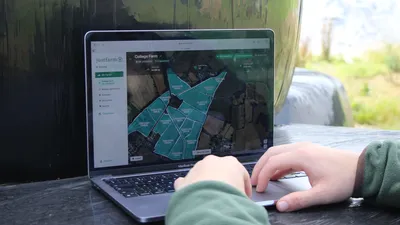
Get your digital maps right before you start. If your maps in the Rural Payments service are inaccurate — wrong boundaries, missing parcels, incorrect land covers — your application will hit problems. Request corrections now. It takes time.
Rebuild your income model using current action guidance. Do not use SFI24 figures. The management payment is gone (£1,000/year fixed), herbal leys are down 41%, several high-value actions have been removed, and upland rates have increased. Check each action you intend to use in the current guidance once final rates are confirmed in mid-June.
Be deliberate about your year-one rotational area. Whatever area you enter for rotational actions in year one is your ceiling for the whole agreement. Think about where you want to be in year three — but do not commit more than you can actually manage and evidence in year one.
Check each action individually before you include it. Do not rely on what you knew from SFI24. Actions have been amended and some have been removed. Check the current version of any action you are planning to use, and check again once the final guidance is published in mid-June.
Plan supplemental and base actions together. If you want supplemental actions, their base actions must be in the same application. Once your agreement starts, you cannot add supplemental actions that were not in your original application.
Keep evidence from day one. SFI26 evidence must be kept for seven years from the end of the agreement. Build the habit of recording as you go — dated photographs, field records, receipts — rather than trying to reconstruct later.
The one-agreement rule means your SFI26 application is one of the more consequential planning decisions you will make this year. The combination of reduced action count, revised payment rates, and a locked-in structure means preparation before the application goes in matters more than it did under SFI24. Use the time between now and 30 June to get that preparation right.
JustFarm is a planning system, mapping tool, and evidence organiser built to make SFI applications — and the three years that follow — more manageable. You can explore the SFI page to see how it fits, or create a free account to get started.