The first SFI26 application window opens in June 2026. If you are a small farm under 50 hectares or you do not currently hold an ELM revenue agreement, you are in the first cohort eligible to apply. Window 2 follows in September for everyone else.
On 6 May 2026 DEFRA published its "Get ready to apply for SFI26" guidance. The message is not subtle. The Rural Payments Agency wants farmers in their account now, checking the same things that quietly derail applications every year. Out-of-date land covers. The wrong people listed with permissions. A registered address that bounces post. Each one is a small admin problem on its own. Together they are why eligible farms sometimes cannot click submit on day one.
Window 1 is also, in effect, first come, first served. DEFRA has been clear that it cannot set a firm closing date because that will depend on uptake. Once the budget is committed, the window shuts. There is no benefit to leaving preparation until the link goes live.
Here are the five practical checks to work through before June.
Confirm your business is actually eligible for Window 1
Window 1 is restricted. To apply, your farm business must have been registered with the RPA by 1 January 2026 with an SBI that already had agricultural land linked to it on that date. You also need at least 3 hectares of agricultural land linked to your SBI at the point of application.
On top of that you need to fit one of two categories. Either you are a small farm with less than 50 hectares of agricultural land on 1 January 2026, or you do not hold an existing RPA-administered ELM revenue agreement. If you are not in either group, you wait for Window 2 in September.
If you are not sure which side of the 50 hectare line you fall, the figure DEFRA will use is the one tied to your SBI on 1 January 2026. Check that number now, not in June.
Bring your digital maps up to date
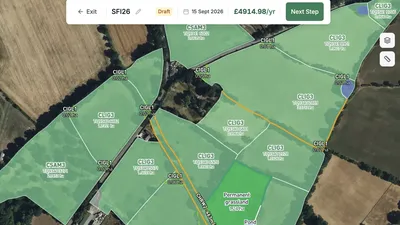
This is the single most common reason applications stall. Agricultural land for SFI26 means land registered by the RPA with specific land covers shown on your digital maps. If those maps are wrong, the actions you want will not be selectable against the right parcels.
Two things to verify.
First, every land parcel you plan to include is on your map, with the correct total area in hectares for each parcel.
Second, the land cover for each parcel is right. Arable, permanent grassland, permanent crops, relevant non-agricultural cover. Each action has different land cover eligibility, so a parcel logged as the wrong type will silently exclude it from the action you wanted.
You do not need to check or update registered hedgerow lengths. Those are not used in SFI26 applications.
Check contact details and permissions in Rural Payments
A surprising number of applications fail at the permissions step. The named person trying to apply does not actually have the permission level required to submit a scheme agreement.
Two things to confirm in Rural Payments.
Your registered contact details, including the postal address and email, are current. RPA correspondence about your agreement will go to those addresses for the next three years.
Your permissions are set so the right person can submit. If a land agent or family member is applying on your behalf, they need Submit-level permission against your business before Window 1 opens. Adding that takes a couple of minutes on the day, but only if the account holder is available.
Map the actions you actually want against your land
SFI26 has 71 paid actions, down from 102 in SFI24. Several rates have changed, the £20 per hectare annual management payment is gone, and there is a £100,000 cap on each agreement per year. One agreement per farm business.
Before Window 1 opens, work through which actions fit your land, your rotation and your business goals. Look at the practical limits as well. Some actions are capped at a percentage of your SBI area. Some require specific land covers. Some pair badly with existing CS agreements.
The table below sets out the headline parameters confirmed for SFI26.
| Parameter | SFI26 |
|---|---|
| Paid actions available | 71 |
| Minimum agricultural land | 3 hectares linked to SBI |
| Window 1 eligibility | Small farms under 50ha or farms without an existing ELM revenue agreement |
| Window 1 opens | June 2026 |
| Window 2 opens | September 2026 |
| Maximum agreement value | £100,000 per agreement year |
| Agreements per business | One SFI26 agreement per farm business |
| Agreement length | Three years |
| Annual management payment | Removed |
Choose the actions, sketch where they sit on the farm, and confirm the parcel acreages add up under the action caps. That is the work that makes the application itself a 30 minute job rather than a three day scramble.
Start building evidence now, not later
Every SFI action carries evidence requirements over the three year agreement. Photos with dates and locations. Records of operations. Inputs and timings. Maps showing where the action sits. The agreement starts the day it is accepted, which means evidence for year one starts then too.
The principle to plan around is simple. If you cannot prove it, it did not happen. Building a habit of dating, locating and filing field photos before June will save real time the first time a request for evidence lands.
What we still do not know
DEFRA has been clear that final guidance on some actions will continue to update through May. The full Capital Grants 2026 item list and applicant guide are also due in May, before the offer opens in July, and that will affect any plans to combine SFI26 actions with capital works.
It is also unclear how quickly Window 1 funding will be committed. Until uptake is visible, the safest assumption is that the window may close early.
What to do now
A short list, in order.
Confirm your SBI shows the right hectarage and was registered before 1 January 2026.
Open Rural Payments, check your digital maps, update any wrong land covers, and confirm contact details.
Set the right permissions for anyone who will help submit the application.
Draft your action mix on paper, against your fields, and check the totals against the caps.
Start the evidence habit. Photos with date and location for any work that might end up linked to an action.
How JustFarm helps
This is the work JustFarm was built for. The mapping tool sits over your RPA parcels so you can model action mixes against the land before you commit. The evidence organiser keeps dated, located records against each action so a year three audit is a search, not a hunt. The compliance engine flags conflicts between SFI, Countryside Stewardship and the new Capital Grants rules before they cost you. SFI rewards prepared farms, and probably fine is not a compliance strategy.
The Basic plan is free. Pro adds the deeper compliance, evidence and planner features.
If you want a head start before June, explore the SFI page or view pricing to see which plan fits.
FAQs
When does SFI26 Window 1 open? June 2026. DEFRA has not given a fixed end date because the window will close once the budget is committed.
Who can apply in Window 1? Small farms under 50 hectares, or any farm without an existing RPA-administered ELM revenue agreement. You also need at least 3 hectares of agricultural land linked to an SBI registered before 1 January 2026.
How many SFI26 actions are there? 71 paid actions, down from 102 in the SFI24 extended offer.
Is there a payment cap on SFI26? Yes. £100,000 per agreement year, with one agreement per farm business and a three year agreement length.