A lot of farmers carry out the work. Fewer can prove it.
That gap matters with the Sustainable Farming Incentive (SFI). The scheme pays for management actions carried out on your land over the course of the year. The Rural Payments Agency can ask you to demonstrate, at any point, that you have done what you claimed payment for. If you cannot show the evidence, you face the prospect of payment reductions or recovery of money already paid.
This is not about bureaucracy for its own sake. The evidence requirement is the mechanism that makes the scheme credible. And it is not difficult to meet — provided you build the habit of recording as you go, rather than trying to reconstruct at the end.
Why Evidence Gets Left Until Too Late
The problem is rarely that farmers do not do the work. It is that recording it feels like an extra job on top of an already full day.
A cover crop goes in. A hedgerow gets laid. Soil samples are taken. All of it happens, and anyone who knows the farm knows it happened — but three months later, when a payment query arrives or an inspection is flagged, the records do not exist or cannot be found.
Good evidence is built over time. An inspection or spot-check that arrives without warning will catch the farmer who has been meaning to write things up, not the one who recorded it at the time.
What the RPA Is Looking For
The RPA does not publish a single universal evidence list for SFI. Requirements vary by action. But across the scheme, the types of evidence that matter fall into recognisable categories:
Records made at the time. Dated photographs, field diary entries, farm management software records. Evidence carries more weight when it was clearly created on or near the date the activity took place, not retrospectively assembled.
Receipts and invoices. For actions involving purchased inputs — seed, fertiliser, equipment — purchase receipts confirm that the materials used were appropriate to the action and were actually applied.
Third-party records. Laboratory soil sample results, nutrient management plans produced by a FACTS-qualified adviser, agronomist reports, vet health plans. Where a qualified professional is involved, their documentation is strong evidence.
Mapping. Showing which parcels actions were carried out on, and where within those parcels. This is particularly important for actions with spatial requirements — buffer strips, in-field trees, watercourse margins.
Plans and assessments. For actions that require a plan to be in place — integrated pest management plans, soil management plans, water management plans — the plan itself is the primary evidence, alongside records showing it has been followed.
Evidence by Action Type
Different SFI actions carry different evidence requirements. Here is a practical overview of the main categories:
Soil Actions
Actions such as soils assessment, multi-species cover crops, and no-till or reduced tillage require evidence that connects back to the specific parcels in your agreement.
For soil sampling actions, laboratory results are the core evidence — dated, with the parcel clearly identified. Results should match the frequency required under the action. Keeping a log of when samples were taken and by whom adds useful context.
For cover crop actions, seed purchase receipts, drilling records, and dated photographs before and after establishment are the main evidence types. If the crop is destroyed before spring, a record of the destruction date and method is worth keeping.
For reduced or no-till actions, machinery records or contractor invoices showing cultivation method, combined with field records noting drilling dates and methods, support your claim.
Integrated Pest Management (IPM)
IPM actions require an IPM plan to be in place and followed. The plan is not a one-off document — it needs to be reviewed and acted on through the season.
Evidence includes the written plan, spray records showing products used and application dates, records of pest monitoring, and notes on non-chemical control measures used. If you are working with an agronomist, their recommendations and visit records are useful supporting evidence.
The RPA will look for a connection between the plan and what was actually done on the farm. A plan that exists but shows no relationship to recorded activity is weaker evidence than a plan with a clear trail of implementation behind it.
Hedgerow and Boundary Actions
Hedgerow management actions typically require photographic evidence of the hedgerow condition before and after management, records of when management took place, and confirmation that management was carried out outside the bird nesting season where required.
For hedgerow assessment actions, the written assessment is the primary evidence, with clear identification of which hedgerows were assessed and when.
Where capital works on hedgerows are involved — restoration, laying, coppicing — contractor invoices or records of materials used support the claim.
Water and Wetland Actions
Actions related to watercourse margins, in-field ponds, and riparian management require mapping evidence showing where the features are located and their dimensions, dated photographs showing management, and records of any works carried out.
For actions requiring Catchment Sensitive Farming support — such as some water quality actions — documentation of that advisory engagement is itself part of the evidence base.
Livestock and Grazing Actions
Grazing management actions require stock records, grazing diaries, or livestock movement records that confirm when animals were on specific parcels and at what density. For actions with stocking rate requirements, the records need to be specific enough to demonstrate compliance over the required period.
For actions requiring livestock exclusion — from watercourses or sensitive habitats — photographs showing fencing in place and records of fence maintenance are the relevant evidence.
What Good Record-Keeping Looks Like in Practice
The farmers who handle SFI evidence well are not doing anything complicated. They are recording actions shortly after they happen, keeping documents in a consistent place, and making sure photographs are dated and linked to specific parcels.
A simple field diary, whether paper or digital, kept up through the season will provide the core of most evidence requirements. Photographs taken on a smartphone with GPS and date metadata intact are straightforward and credible. Receipts kept rather than discarded.
The key is consistency. Evidence gathered as you go is categorically stronger than evidence assembled afterwards. And evidence assembled afterwards is categorically stronger than no evidence at all.
What We Do Not Know
SFI guidance is updated regularly, and specific evidence requirements for individual actions are set out in the action-level guidance rather than a single overview document. For the most up-to-date requirements on a specific action, the DEFRA farming guidance pages and the action-level SFI information on GOV.UK are the authoritative sources. If you are unsure what is required for a particular action in your agreement, clarifying this before the agreement year begins is time well spent.
People Also Ask
Does the RPA inspect SFI agreements? Yes. The RPA carries out checks, which can include remote sensing, desk-based reviews, and farm inspections. You should be able to demonstrate compliance with your agreement at any point during the agreement year.
How long do I need to keep SFI evidence? Generally, you should keep records for the duration of your agreement and for a period afterwards. The specific retention period is set out in your agreement documents — typically five years from the date of last payment.
What happens if I cannot provide evidence? If you cannot demonstrate that an action was carried out as required, the RPA can apply a payment reduction or recover payments already made. The severity depends on the nature and extent of the non-compliance.
Can I use the same evidence for SFI and Countryside Stewardship? Evidence records can often serve both schemes where the same activities are relevant, but the requirements are set separately for each scheme and should be checked against the specific action rules in each agreement.
What to Do Now
Look at the actions in your current SFI agreement and check what evidence each one requires. If you have gaps in your records for the current agreement year, start filling them now — not at the end. Set up a simple, consistent place to keep records so that photographs, receipts, and diary entries are findable when you need them.
If you are planning to enter SFI, factor evidence management into your preparation before the agreement starts. Know what you need to record before you start recording it.
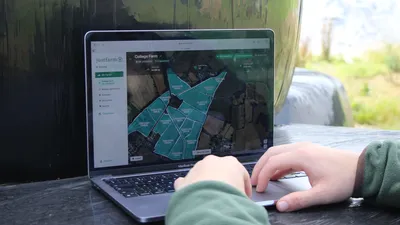
Managing evidence across multiple SFI actions, on multiple parcels, for more than one agreement is the kind of admin that benefits from structure. JustFarm is built as an evidence organiser as well as a planning and mapping tool — helping farmers and agents keep the records that make SFI compliance straightforward rather than stressful. You can explore the SFI page to see how it works, or create a free account to get started.