Each December farmers search for “SFI evidence”, “scheme photos”, “field records” and “winter checks”. Winter is the best time to build baseline evidence for SFI 2026, because fields are quiet, boundaries are visible and you have time to organise paperwork before spring workload ramps up.
This guide answers the top questions farmers ask, using simple explanations and farm ready steps. After each answer you will see how JustFarm makes the job quicker, safer and fully compliant.
Frequently asked Questions
What counts as evidence for SFI?
Photos, dated field operation logs, invoices and receipts, soil test results, and linked notes that show how and when you met an action’s aim. The guidance makes clear that action guidance sets the records you must keep. GOV.UK+1
Do I need to keep photos for every action?
Yes where the action requires photographic or written records. Many SFI actions explicitly list photographic evidence as “evidence to keep”. Keep originals with timestamps and link them to parcels. GOV.UK
How long should I keep records for SFI?
Keep evidence for the duration the scheme requires. GOV.UK and scheme handbooks specify retention periods, commonly seven years for inspection and audits. Check the action details for exact times. GOV.UK+1
What winter checks are useful for scheme evidence?
Baseline photos of fields and hedges, soil test results, maps of field boundaries, records of any winter operations such as wayleaves, grazing dates, or cutting dates, and fertilizer or slurry spreading logs. These show condition at the start of the scheme year. Defra Farming+1
How should I take photos for evidence?
Take clear, dated photos showing the whole feature, plus close ups. Include GPS-tagged photos where possible, with a note linking the photo to the parcel and the action. Guidance suggests photos and short videos are useful evidence. Defra Farming
What counts as SFI evidence in plain language
SFI does not expect a folder of unreadable paperwork, it expects proof you are doing what you say. The evidence types you will need most often are:
- Photographs and short videos, dated and clearly showing the feature or operation.
- Field operation logs, showing dates, what you did, and who did it.
- Invoices and receipts, for seed mixes, contractors, feed or capital items.
- Soil test results, maps and baseline surveys.
- Maps and field references, parcel IDs and boundary evidence to show the action applies to the right land.
- Notes on timing and methods, e.g., “cut for hay on 12 Jul, baled 14 Jul” or “planted winter bird mix 03 Oct with X seed mix”.
The SFI handbook and action sheets set out what you must keep for each action, and many actions explicitly state “you must keep the required written or photographic record and supply this evidence if we ask for it”. Treat the action detail as your checklist. GOV.UK+1
How JustFarm helps for this section
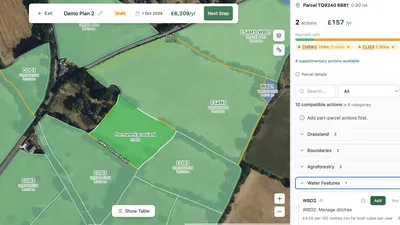
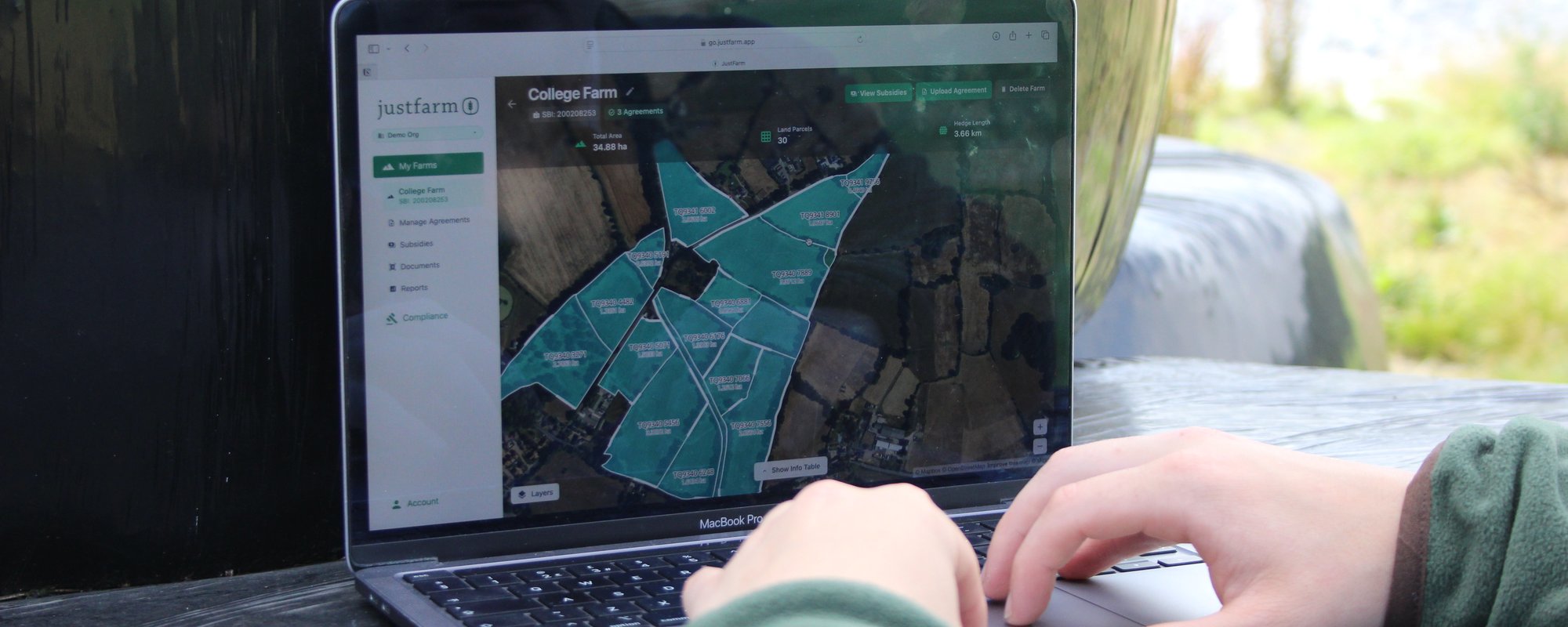
- Map parcels once, store parcel IDs and boundary photos.
- We tell you what you need to do and when to do it for every action.
- Attach photos, videos, invoices and soil tests directly to the parcel with timestamps and GPS.
- Tag each piece of evidence to the SFI action so nothing is orphaned.
- Produce a single audit export that bundles everything the RPA might ask for.
Winter evidence you should collect now — practical list
December to February is perfect for collecting baseline evidence. Here is a practical collection plan you can use on-farm.
- Field baseline photos
- Take at least one wide shot of each entered field showing the whole field and its boundaries, and two or three close ups of key features like cover crops, margins, drains, hedge condition, gateways.
- Include a photo with a marker or gatepost for scale where the boundary is unclear.
- Note: take photos on dry days where possible so features are visible. Defra Farming
- Boundary and boundary feature evidence
- Photograph hedges, fences, watercourses and access points. If a boundary is a mapped feature on your land registry or mapping system, link that document.
- Keep a short written note for each boundary, including any third party rights or access. GOV.UK
- Soil tests and baseline measurements
- Topsoil test results for pH, P, K and organic matter where relevant. Keep lab reports and link to fields. These are key for soil actions. GOV.UK
- Records of last year’s management
- Last year’s cropping, sowing and harvesting dates, grazing start and finish, sprays and fertiliser applications. Invoices or contractor notes to back up dates. Wilson Fearnall
- Evidence for habitat actions
- If you are planning buffer strips, wild bird mixes, or pollen and nectar areas, photograph establishment steps: seed deliveries, seed bags, drilling or sowing method, and early establishment checks in spring. The action guidance asks for evidence that the aim is being met. GOV.UK+1
- Winter spreading and storage logs
- Records of slurry and manure movements, storage capacity checks and any Environment Agency or local authority communications are useful to show compliance with water protection actions and winter spreading rules. Farming Advice Service+1
- Contractor and machine records
- Who did the work, machine hours, contractor invoices and a short note on method when a specific action requires it.
- Weather and condition notes
- Short notes or screenshots showing weather around key dates can explain actions that were delayed or changed for practical reasons.
How JustFarm helps for this section
- JustFarm tells you what you need to do and when to do it for every action.
- Use the mobile app to run a “winter evidence sweep” checklist by parcel.
- Capture photos with auto timestamps and GPS, and auto attach them to the parcel and action.
- Upload lab PDFs and invoices to the same parcel so everything is in one place.
- Schedule reminders for re-checks, for example early spring establishment photos.
How to take photos that pass inspection
Photos are the simplest evidence, but they must be useful. Do these every time:
- Show the whole feature first, then at least one close up.
- Ensure the photo includes an identifiable feature like a fence, gateway or hedgerow so the inspector knows which field it is.
- Use the phone’s timestamp and GPS where possible. If your phone strips GPS, add a short note: field ID, date and who took the photo.
- Take comparison photos: winter baseline and a spring follow up. That proves establishment or change over time.
- Keep raw photos and a copy labelled with parcel ID and action code.
The RPA guidance explicitly recommends photos and short videos as useful evidence to demonstrate you are meeting an action’s aim. Defra Farming
How JustFarm helps for this section
- JustFarm tells you what to take evidence of and when for every action.
- Camera uploads automatically include date and GPS, and you can add a parcel tag in-app.
- The app prevents “loose photos” by forcing you to choose a parcel and action when you upload.
- Organise photos into folders like “baseline winter” and “establishment spring” and export in the exact order an inspector would expect.
Record keeping, retention and exports
- Read the SFI handbook and the action sheet for retention periods. The handbook sets minimum requirements and tells you what to expect at a site visit. GOV.UK
- Keep digital copies of invoices, lab results and signed contractor notes. Where a paper signature is needed scan and upload it.
- Keep everything in an organised folder structure by year, parcel and action. Use consistent file naming: ParcelID_Action_YYYYMMDD_type.
- Prepare an audit pack: a single PDF or ZIP with a cover page, parcel list, and the required evidence sorted by action. That is what inspectors want to see first.
How JustFarm helps for this section
- One click exports create audit-ready reports grouped by parcel and action.
- JustFarm stores evidence securely for the scheme retention period you choose.
- Built in naming and version control stops duplicate or misplaced files.
- For land agents, bulk export across multiple clients saves hours before a cross-client site visit.
What inspectors look for and how to explain unavoidable variations
Inspectors look for two things, did you do what you said you would do, and is your evidence credible. If you had to change a plan because of weather, animal health or contractor delays:
- Keep dated notes explaining why and when the change happened.
- Add supporting evidence such as weather screenshots, vet or contractor messages, and invoices showing the change.
- If you notified RPA or got advice, keep that correspondence.
Guidance on monitoring and site visits highlights the need to explain how actions meet their aims, not to follow a rigid how-to. Good, honest notes make the difference between an explanation and a breach. Defra Farming+1
How JustFarm helps for this section
- Add incident notes linked to a parcel with time, photos and attachments.
- Keep copies of emails, RPA advice notes or contractor texts in one place so you can export the full story for inspectors.
- A timeline view shows inspectors sequence of events, making explanations simple to follow.
Winter evidence checklist you can use today
Do this during December and January. Tick as you go.
- Map every parcel and confirm parcel IDs.
- Take wide and close up baseline photos for each parcel.
- Photograph all boundaries and features that define parcel limits.
- Upload last year’s cropping and grazing dates with supporting invoices.
- Send soil samples and upload lab reports when they come back.
- Scan and upload contractor invoices and delivery dockets for seed and materials.
- Record any winter spreading or storage checks and attach EA or local authority guidance if relevant.
- Create a named audit folder for each parcel.
- Make a short incident log template and use it when plans change.
- Export one sample audit pack and review it as if you were the inspector.
How JustFarm helps for this section
- One tap to map and tag parcels, clear guidance on what to do and when to do it for every action, bulk photo upload with auto GPS and timestamp, and a built in audit pack generator to test your readiness.
December is the best month to get on top of your evidence. If you want to be inspection ready for SFI 2026, set aside a day to do a winter evidence sweep, map your parcels, and start attaching photos and invoices. If you want, we can prepare a bespoke Winter Evidence template for your farm with JustFarm, and an export you can use at your first site visit.