Major changes to the Sustainable Farming Incentive were announced at the NFU Conference 2026, with Environment Secretary Emma Reynolds confirming a significant reset of the scheme.
The headline figures are clear. The number of actions will reduce from 102 to 71, and a £100,000 payment cap will be introduced. (FarmingUK)
The government says the reforms aim to strike a better balance between simplicity and flexibility, while keeping environmental delivery central. (NFU Online)
Here is what we know so far, what remains unclear, and what farmers should do next.
The Numbers
Actions reduced: 102 down to 71
Defra confirmed that the SFI action list will be cut from 102 options to 71. The intention is to simplify the scheme and remove duplication, making it easier for farmers to understand and apply. (FarmingUK)
The full list of which 31 actions are being removed has not yet been published. That detail will determine how significant the practical impact is across different farm types.
This is one of the most significant structural changes to SFI since its launch.
New £100,000 payment cap
A new £100,000 cap on SFI payments has been introduced as part of the reset. (FarmingUK)
The full operational detail has not yet been published, but the cap is intended to distribute funding more evenly across farm sizes.
Key questions remain:
- Is the cap per year or per agreement?
- Does it apply per business or per SBI?
- Are there exemptions?
- How does it interact with Countryside Stewardship?
Until DEFRA publishes full operational guidance, larger farms should begin modelling what a £100,000 ceiling means for their existing SFI portfolio.
Small Farm Definition and Application Windows Explained Clearly
This is one of the most important operational details from the announcement.
The first application window for SFI will open in June for small farms. The Defra Secretary has clarified that small farms are defined as holdings between 3 and 50 hectares that are registered with the Rural Payments Agency.
This June window is not just limited by size. It will also be open to farms that are not already in an Environmental Land Management agreement.
That means eligibility for the first window includes:
- Farms between 3 and 50 hectares registered with the RPA
- Farms of any size that are not currently in an ELM agreement
After this June window closes, a wider second application window will open in September.
This means:
- Farms above 50 hectares that are already in ELM agreements will need to wait until September
- Farms between 3 and 50 hectares have an earlier opportunity to apply
- Farms not currently in an ELM agreement can access the June window even if larger
This detail is commercially significant. It defines who can access funding first and who must wait.
What Is Staying
Uplands actions retained
Despite the slimming down of options, upland actions are expected to remain in place, signalling continued recognition of hill farmers and the role they play in environmental delivery. (HortWeek)
For upland businesses, this continuity is important and reduces uncertainty.
This was welcomed by industry bodies concerned about maintaining support for less intensive systems.
Flexibility remains
While the scheme is being simplified, flexibility has not been removed. The NFU president Tom Bradshaw has said the reforms “strike the right balance” between simplification and maintaining flexibility for different farm types. (NFU Online)
The practical reality of that balance will depend on how the remaining 71 actions are structured and how prescriptive their specifications become.
What We’re Still Waiting For
Several important details have not yet been published:
- The full list of which 31 actions have been removed
- Confirmation of how the £100,000 cap works in practice
- Clear definition of what counts as a small farm
- Application window dates for the revised offer
Industry commentary has welcomed clarity on direction, but emphasised the need for detailed guidance quickly. (FarmingUK)
Until the full handbook is released, planning must remain flexible.
Industry Reaction
NFU President Tom Bradshaw responded positively to the announcement, welcoming clearer direction and acknowledging the attempt to balance simplicity with flexibility. (NFU Online)
Across conference coverage, the tone suggested cautious optimism. The reset has been framed as pragmatic, with one industry report describing farmers as encouraged by the clearer structure and funding commitments. (HortWeek)
There is still concern about profitability pressures, energy costs and inflation across the sector, which were also raised during the conference discussions. (HortWeek)
The mood was not celebratory, but it was more stable than many expected.
What This Means For Your Farm
The reduction to 71 actions does not mean less opportunity. It means fewer choices, potentially clearer pathways, and greater competition within capped budgets.
The £100,000 cap means larger farms may need to reassess how they structure actions. Smaller and medium-sized farms may find opportunities redistributed more evenly.
The key theme remains preparation.
What Farmers Should Do Now
- Review your current SFI agreement and total annual value.
- Assess whether you are near or above £100,000 annually.
- Identify which of your actions may be vulnerable if the list is reduced.
- Strengthen your evidence capture while waiting for the final handbook.
- Stay alert for the publication of the 71 confirmed actions.
How JustFarm Can Help
Changes like this are exactly why organisation matters.
Here is what we recommend now:
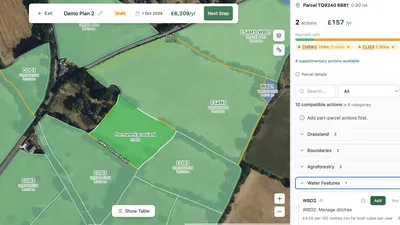
- Review your current actions inside your dashboard.
- Ensure all parcels are mapped accurately.
- Make sure your evidence is complete for each action.
- Prepare to pivot quickly once the full 71 action list is released.
We will update the JustFarm platform as soon as the official guidance is published so that eligible actions, payment structures and caps are reflected accurately in your planning view.
What JustFarm Is and How to Get Started
1. Plan Clearly
JustFarm maps your farm and overlays eligible SFI and Countryside Stewardship actions directly onto your parcels, so you know what fits where.
2. Capture Evidence Automatically
Take photos, log operations and upload invoices in the field. Everything is timestamped and linked to the right parcel.
3. Stay Inspection Ready
Your dashboard shows how complete your evidence is, stores records for seven years, and lets you export inspection-ready reports instantly.
Getting started is simple. Create your farm profile, upload your parcels, and begin building structured evidence from day one.
Final Thought
The SFI reset announced at NFU Conference 2026 is significant. 71 actions instead of 102. A £100,000 cap. Clearer structure. Fewer moving parts.
But clarity does not remove compliance. It increases the need to be organised.
We will break down the full 71 actions as soon as Defra publishes the final list. Follow us for updates and practical guidance as the detail emerges.