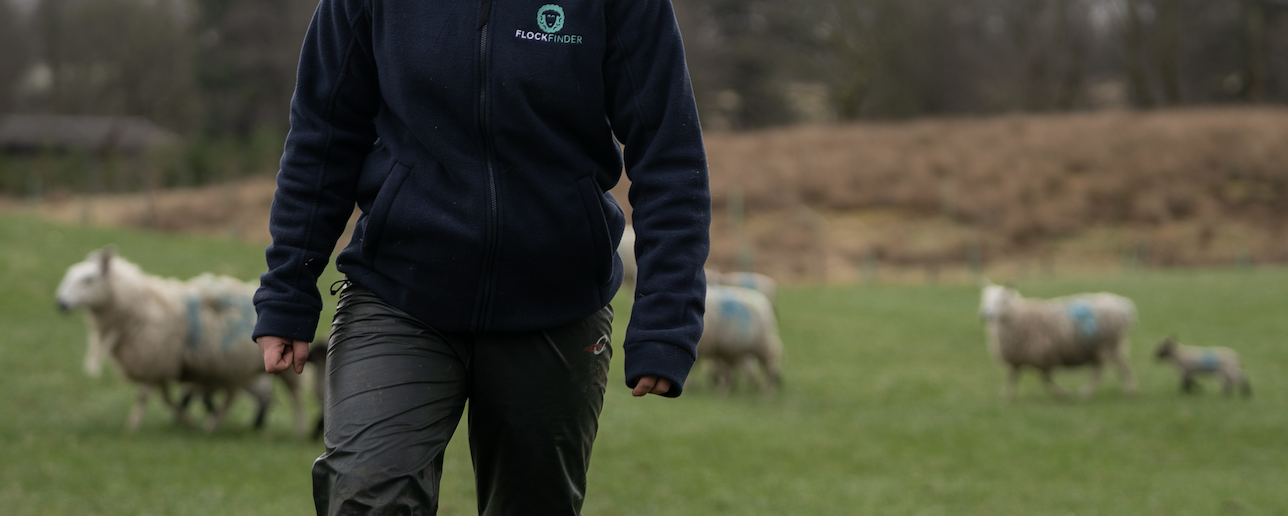
Farming has always been a family business.
Long before environmental schemes, compliance frameworks and digital mapping systems, farms depended on families working together to keep the business running. While the public image of farming often centres on tractors, livestock and field work, the reality inside many farm businesses has always been broader.
Across the country there are women managing livestock systems, planning cropping decisions, overseeing finances, coordinating staff and guiding long-term strategy. Some are farm managers in their own right. Others run farms alongside partners or family members. Many have stepped into leadership roles that previous generations might not have expected.
International Women’s Day is a moment to recognise that reality.
Women are not simply supporting farm businesses. They are running them, shaping them and helping them adapt to an industry that is changing quickly.
The reality on many farms
Across agriculture there are countless examples of women acting as the operational backbone of farm businesses.
They are:
- managing livestock units and grazing systems
- planning cropping decisions and working with agronomists
- overseeing contractors and machinery investment
- handling finances and long-term planning
- coordinating advisors and agents
In many cases they are balancing several of these responsibilities at once.
The role of a modern farmer increasingly requires both practical experience and strong business management. It involves making decisions about land use, understanding environmental policy, managing risk and ensuring the farm remains commercially viable.
Women across the industry are doing exactly that.
What we see every day
At JustFarm we speak with hundreds of farms and advisors across the country. One thing becomes clear very quickly.
A significant number of the farms using the platform are run or co-run by women.
They are the ones making decisions about environmental agreements, organising farm data and thinking about how the business adapts to changing policy and market pressures. In many cases they are also leading conversations about how the farm can become more organised and future-ready.
We also work closely with advisory businesses and agents helping farms navigate schemes like SFI and Countryside Stewardship. Many of the most forward-thinking advisory teams we encounter include women leading work on environmental schemes, compliance strategy and long-term farm planning.
These are not administrative roles. They are strategic ones.
Advisors working in this space are helping farms understand policy shifts, model agreement options and make decisions about how land is managed over the next decade.
Helping farms transition into a more digital industry
Agriculture is moving steadily into a more digital era.
Environmental agreements require mapping. Evidence must be recorded. Compliance systems require documentation and organisation. What once lived in notebooks or filing cabinets increasingly needs to exist in structured digital systems.
One pattern we have noticed repeatedly is who often introduces those systems.
Many of the women we speak to are the ones exploring how technology can help the farm operate more smoothly. They are introducing mapping tools, organising scheme evidence, or helping move farm records from paper to digital systems that are easier to manage.
Sometimes that role is very direct. A farm manager deciding to adopt a new system to organise agreements and compliance.
Other times it is more gradual.
It might be a daughter helping parents move their records into digital systems, or a partner demonstrating that evidence for environmental schemes can be managed more easily with the right tools. We regularly speak to women who are gently guiding fathers who have farmed successfully for decades but are understandably cautious about technology, showing them that there may be a better way to organise the growing complexity of modern farming.
The motivation is rarely technology for its own sake.
It is about making the business easier to run.
Leadership across the advisory community
The same shift is happening across the advisory sector.
More women are working as agents, consultants and advisors helping farms navigate environmental schemes and policy changes. These roles require a combination of agricultural knowledge, organisational skill and the ability to translate complicated guidance into practical decisions for farmers.
Many of the advisors we work with are leading conversations around environmental agreements, land use planning and long-term farm strategy.
They are helping farms understand how schemes fit into the wider business and ensuring that decisions made today still make sense several years down the line.
This kind of advisory leadership is becoming increasingly important as the policy landscape continues to evolve.
Inside JustFarm
This shift is also reflected within our own company.
Our team includes strong female leadership, including our Commercial Director and Head of Marketing. Their perspective plays an important role in shaping how JustFarm develops and how we support farms and advisors navigating complex environmental schemes.
That influence helps ensure the platform reflects how farms actually operate in the real world, rather than how people might imagine they operate from outside the industry.
The future of farming leadership
Agriculture is entering a period of significant transition.
Environmental policy, digital systems and changing market pressures are all reshaping how farms operate. Businesses that succeed will be those able to combine practical farming knowledge with organisation, planning and long-term thinking.
Across the industry, women are already leading that shift.
They are running farms, guiding business decisions, advising clients and introducing new ways of organising increasingly complex operations.
International Women’s Day is an opportunity to recognise that contribution.
Not because it is new, but because it is becoming more visible.
The future of farming will be shaped by people who can combine practical experience with organisation, technology and strategic thinking.
Increasingly, women are at the centre of that change.