This is one of the most routine deadlines in the farming calendar.
It is also one of the most commonly rushed.
The Countryside Stewardship and Environmental Stewardship claim window opened on 18 March 2026, and the deadline to submit without reduction is 11.59pm on 15 May 2026.
After that, claims can still be submitted until 1 September 2026, but a reduction is applied. The later you submit, the more you lose.
Do not aim for 15 May. Aim to be finished before it.
What this deadline actually represents
On paper, this is a claim submission.
In reality, it is a confirmation that everything in your agreement has been delivered correctly.
When you submit your claim, you are confirming:
- all actions were completed
- they were done on the correct parcels
- timing requirements were met
- the land was eligible
- you have evidence to support it
The form is quick.
The risk sits behind it.
The penalty structure (and why timing matters)
Late claims are accepted, but they are reduced.
The RPA applies daily reductions, not fixed bands. The longer the delay, the greater the reduction.
The table below is indicative, based on how reductions typically scale over time.
| Submission Timing | Indicative Outcome |
|---|---|
| By 11.59pm on 15 May 2026 | Full payment, no reduction |
| Late May | Small reduction applied |
| June submissions | Moderate reduction applied |
| July to 1 September | Significant reduction applied |
| After 1 September | No payment, potential agreement breach |
The exact percentage depends on how late the claim is submitted.
The principle does not change.
Delay costs money.
What you need to do before 15 May
The farms that handle this well are not doing anything complicated.
They are just structured.
1. Check your agreement matches reality
Log into the Rural Payments service and confirm:
- parcel boundaries are correct
- land use is accurate
- all fields are included
Small mapping errors are one of the most common causes of issues later.
2. Confirm all actions have been delivered
Go through your agreement line by line.
- Has the action been completed?
- Was it done on the right parcel?
- Was it done at the correct time?
If something does not line up, now is the point to deal with it.
3. Check your evidence properly
You are not submitting evidence with your claim.
But you must have it ready.
| Evidence Type | What It Needs to Show |
|---|---|
| Dated photos | Clear link to parcel and action |
| Field records | Dates, methods and areas covered |
| Invoices | Inputs, contractors and timing |
| Maps | Accurate parcel-level delivery |
| Test results | Where actions require them |
If you cannot show it, you cannot prove it.
4. Deal with any changes before submitting
If anything has changed during the year:
- land use
- tenancy
- parcel boundaries
- management approach
It needs to be addressed before you submit.
Declaring on top of unreported changes creates bigger problems.
5. Submit before the deadline
Once everything lines up:
- submit your claim
- keep confirmation records
- retain all supporting evidence
Do not aim for 15 May.
Aim to be finished before it.
CS vs Environmental Stewardship, what is different?
The deadlines are the same.
The process is slightly different.
- Countryside Stewardship (CS)
- Usually submitted online
- Often via annual declaration
- Can be automated if nothing has changed
- Environmental Stewardship (ES)
- Often requires a claim form
- Submitted via post or email
The key point is that both must meet the same deadline.
Where most farms get caught out
It is rarely the submission itself.
It is everything behind it.
The common issues are:
- evidence not collected at the time
- records spread across notebooks, phones and emails
- uncertainty over which parcel an action was delivered on
- last-minute checking revealing gaps
None of these are major on their own.
Together, they slow everything down.
What to do this week
If you want this handled cleanly, do not overcomplicate it.
- Log in and review your agreement
- Walk through each action
- Check your evidence now, not in May
- Fix anything that does not line up
- Set a submission date before the deadline
This is not a complicated job.
It just requires structure.
The reality of annual claims
The claim itself takes minutes.
The confidence behind it is built over months.
Farms that treat evidence as part of the job submit easily.
Farms that treat it as an afterthought spend April trying to reconstruct the year.
That difference shows up at inspection.
How JustFarm Helps With Your CS Claim
Getting your Countryside Stewardship claim right comes down to one thing.
Having the right evidence, clearly organised, when you need it.
That is what JustFarm is built for.
Rotational actions
If you are running rotational actions as part of your agreement, such as winter cover crops, fallow or wild bird seed, keeping track over time becomes difficult.
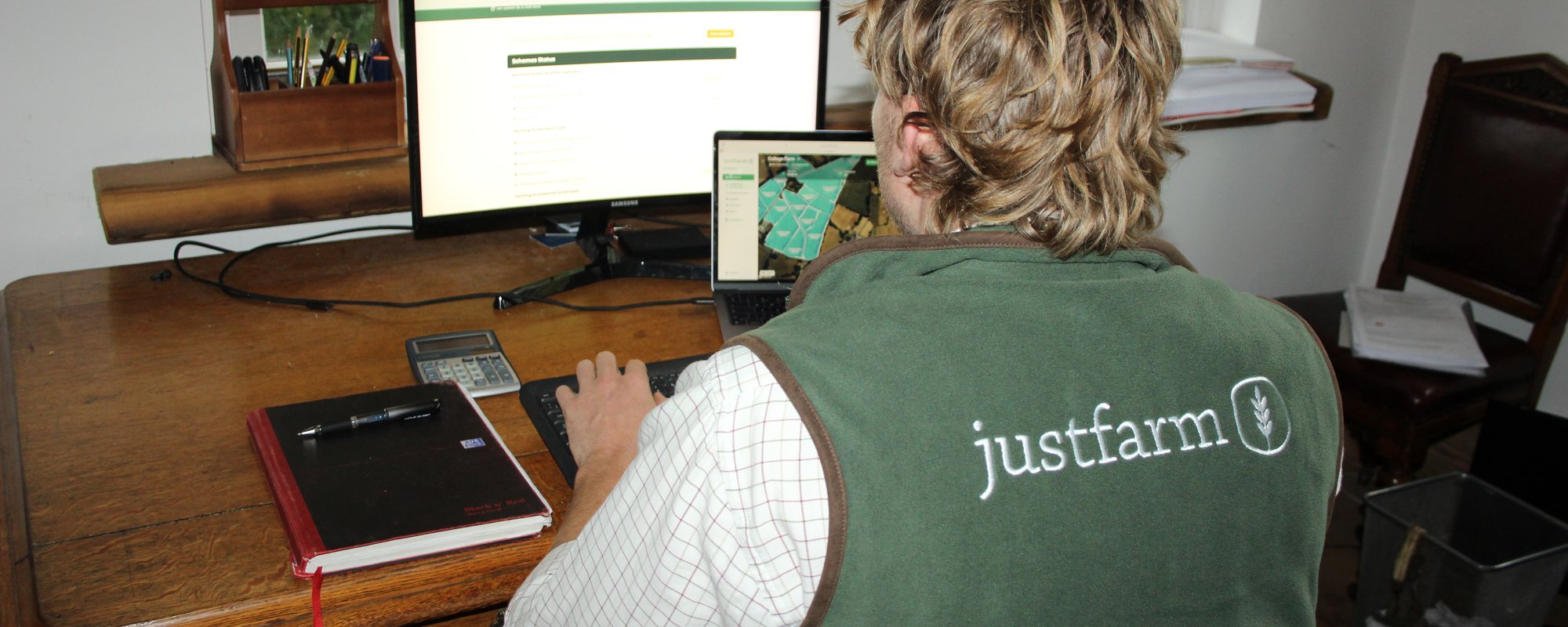
JustFarm lets you log each action as you go, linking it to the correct parcel and date.
By the time the claim window opens, you are not trying to remember what happened where earlier in the year. The record is already there.
Annual declarations
The declaration itself is simple. The preparation behind it is not.
JustFarm keeps your evidence organised by agreement year, so when it comes to submitting your claim you are not searching through emails, photos or spreadsheets.
Everything is already structured and ready to check.
All your evidence in one place
The RPA expects clear, dated records that link directly to parcels and actions.
With JustFarm:
- photos are stored against the correct fields
- notes and records are logged as you go
- evidence builds throughout the year, not in the final weeks
When it is time to submit your claim, you are not assembling evidence. You are reviewing it.
The bottom line
The farms that move through claim season without stress are the ones that recorded as they went.
JustFarm makes that process routine.
Which means when 15 May arrives, you are ready.