The Big Farmland Bird Count 2026 is underway, with this year’s survey running until 22 February 2026. For many farms, it is a valuable opportunity to demonstrate the real-world impact of habitat management.
While taking part in the count is voluntary, the data you collect can strengthen your environmental story, especially if you are delivering SFI or Countryside Stewardship actions that support bird populations.
This guide explains what the Big Farmland Bird Count is, why it matters, which SFI actions relate to farmland birds, and how you can use your bird count data as supporting evidence.
What is the Big Farmland Bird Count?
The Big Farmland Bird Count is an annual national survey organised by the Game and Wildlife Conservation Trust (GWCT). Farmers and land managers spend 30 minutes recording bird species and numbers on their farm during the count window.
The aim is to measure how farmland birds are faring and highlight the positive role farmers play in supporting biodiversity.
Official information and participation guidance is available here:
https://www.gwct.org.uk/bfbc
The count provides valuable citizen science data and demonstrates how farming and wildlife can work together.
Why does the Bird Count matter for farms?
Farmland bird populations have declined significantly over recent decades. Government and industry policy increasingly recognises that farm management plays a key role in reversing that trend.
Participating in the Big Farmland Bird Count:
- Shows active engagement with biodiversity
- Demonstrates habitat delivery in practice
- Provides recorded species data linked to your land
- Strengthens your environmental credentials
While it is not a formal SFI requirement, the data aligns directly with the goals of environmental land management schemes.
Which SFI and CS actions relate to farmland birds?
Several actions under Countryside Stewardship and SFI are designed to support bird habitat and winter survival.
AB9 Winter Bird Food
AB9 provides seed mixes that offer food for farmland birds through the winter. It is one of the most searched options and remains a key habitat action.
Payment rate and guidance are available here:
https://www.gov.uk/government/publications/countryside-stewardship-revenue-options/ab9-winter-bird-food
AB9 directly supports species commonly recorded during the Big Farmland Bird Count, such as linnet, yellowhammer and skylark.
AB8 Flower-Rich Margins
AB8 margins support pollinators and insects, which in turn provide food sources for birds, particularly during breeding season.
Guidance here:
https://www.gov.uk/government/publications/countryside-stewardship-revenue-options/ab8-flower-rich-margins-and-plot-corners
Margins increase invertebrate availability and nesting habitat.
GS3 Field Corners and Buffer Strips
GS3 supports buffer strips that protect watercourses and provide habitat corridors.
These areas offer cover and feeding areas for many farmland bird species.
How can bird count data support SFI evidence?
SFI and Countryside Stewardship agreements focus on delivering environmental outcomes. Inspectors do not require bird counts specifically, but well-documented biodiversity outcomes strengthen your overall compliance position.
Bird count data can:
- Demonstrate habitat use linked to AB9 or AB8 areas
- Show seasonal use of winter food plots
- Provide supporting context for environmental claims
- Reinforce that actions are delivering real ecological benefit
If you are claiming winter bird food or margin actions, and your bird count shows species actively using those areas, that adds credibility to your management.
Evidence should always include:
- Dated bird count sheets
- Location reference for where birds were observed
- Links to relevant parcels and actions
- Supporting photos where appropriate
Common mistakes farmers make
- Completing the bird count but not keeping a copy of results
- Not linking the count to specific habitat parcels
- Treating the count as PR rather than evidence
- Failing to record ongoing habitat management
The value of the count is not just in participation, but in documentation.
How to use Big Farmland Bird Count properly in your evidence file
To make your participation useful:
- Record the exact parcel or field where the count took place.
- Keep the official recording sheet or digital submission confirmation.
- Take photos of the habitat, not just the birds.
- Log management activity around that parcel, such as cutting dates or seed mix establishment.
- Store everything together so it is easy to retrieve.
Good evidence tells a connected story. Habitat created. Habitat managed. Birds present.
How JustFarm helps you log bird-friendly actions
JustFarm makes it easy to turn your bird-friendly work into organised, inspection-ready evidence.
You can:
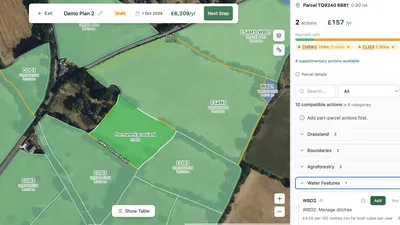
- Map AB9, AB8 and GS3 areas directly onto your parcels
- Upload bird count sheets and photos linked to the exact field
- Log seed mixes and management activity
- Track compliance dates automatically
- Store evidence securely for the full agreement period
Instead of bird data sitting in a drawer, it becomes part of your structured environmental record.
Why this matters ahead of SFI 2026
With SFI 2026 introducing structured windows and continued focus on environmental delivery, farms that can demonstrate clear biodiversity outcomes will be in a strong position.
The Big Farmland Bird Count is not mandatory, but it is a visible demonstration of delivery. When linked properly to your actions, it supports your overall environmental case.
Final thought
The Big Farmland Bird Count 2026 closes on 22 February. If you have taken part, make sure the data works for you. If you have not, consider setting aside 30 minutes before the deadline.
Bird-friendly farming is more than a headline. When recorded properly, it becomes measurable evidence.
Log your bird habitat actions and supporting data in JustFarm so your environmental delivery is clear, organised and ready when needed.